


This week we’ve got good news and some disturbing news. To make your mood swing from good to bad and back to good again (because we love roller coasters), here is the first week of September in short.
Good News, Bad News, and Everything In Between
LG smart homes got a new AI chatbot with a not-very-memorable name
ThinQ Claw, the name you won’t remember from the first try, is a new text-chat AI agent for coordinating smart home devices.

Presented first at IFA 2026, the new agent will help analyze the home environment and appliance usage, check schedules, recommend actions, and coordinate devices. The major value of the new agent is understanding user requests and the context behind them instead of following every instruction as an isolated command. Are we steadily moving to the homes we have seen in sci-fi movies? Learn more about ThinQ Claw on the LG official website.
New wearable device to monitor blood sugar and ketones
One of the latest Reddit discussions was around the new FDA-approved Libre Duo 10 Day wearable device for people with diabetes (and not only for them). While we have many blood sugar monitoring devices, this is the first sensor to continuously track ketones.
Recent studies show that 55% of hospital admissions with diabetic ketoacidosis (DKA) are caused by high levels of ketones. A small device sticks to the skin, monitors, and sends data to an app and alerts when the ketones reach concerning levels. More about the news here.
AI is coming for the world’s financial system, and not in a good way
On Monday, Andrew Bailey, the chair of the Financial Stability Board, sent a letter to finance ministers and central bank governors of G20 countries, warning about cyberattacks and noting that “frontier AI models don’t respect national borders.” Recent developments in AI and regulatory gaps across many jurisdictions cannot go without consequences. These concerns are no longer theoretical. OpenAI has reported experimental models escaping a test environment and accessing another company’s systems, while Anthropic is testing AI under deliberately permissive conditions. The more autonomy we give these systems without clear safeguards, the closer we may get to a point where we can no longer fully control them.
Andrew Bailey is calling on everyone to strengthen vulnerability management and prepare for severe scenarios.
Google is limiting memory for Android apps
Starting February 2027, Google will implement new memory limits, and apps that don’t meet the limits will be slowed down or terminated. The reason for this update is the global RAM shortage. The requirements are already published on the Android Developers Blog. Here is what the new regulations look like in practice. On a smartphone with 8GB of RAM, one can use no more than 2.25GB of memory in the foreground.
Is this another change caused by AI? Absolutely! AI data centers are killing the affordable smartphone market because the memory used for gadgets is now used for data centers. Less RAM, higher prices, slow performance, what’s next? More about the not-so-good news here.
The Pentagon is launching its private AI agent
To support its 3 million military and civilian personnel in using generative AI tools for their “warfighter needs.” Custom versions of ChatGPT Mil and Grok for Government will be used on the GenAI.mil portal. This secure model will process sensitive government data without collecting, storing, or sharing data. The portal has already onboarded 1.7 million users, reporting a positive impact on accelerating work. The tool will focus on document-heavy routine work, administrative tasks, planning, and responding to chat requests. To develop the infrastructure and boost capabilities, the Pentagon is making deals with other companies, including Amazon Web Services, Nvidia, Microsoft, and Reflection AI. Read the TechCrunch overview of the news.
Instagram will limit AI profiles
This Monday, Instagram announced that it will rename AI creators to AI-generated profiles to help users easily identify and distinguish profiles. The label won’t be applied to accounts that use AI to edit photos or captions. This change is a prompt response to users’ concerns that some profiles looked like real people but turned out to be AI. We see dozens of “influencers” in fitness and wellness promoting lifestyles and supplements and making health claims. Users consume such content, follow the advice, and end up losing time, money, and, worst of all, their health. Will it save users from AI profiles? Well, at least they will have enough information to trust these accounts or not.
The new Dyson CamerJet toothbrush will watch out for plaque
On September 1, James Dyson presented a revolutionary (because it is) toothbrush. It has a Gap Optical Targeting camera and a 100,000-pixel lens to identify and floss with a jet burst while brushing the teeth.
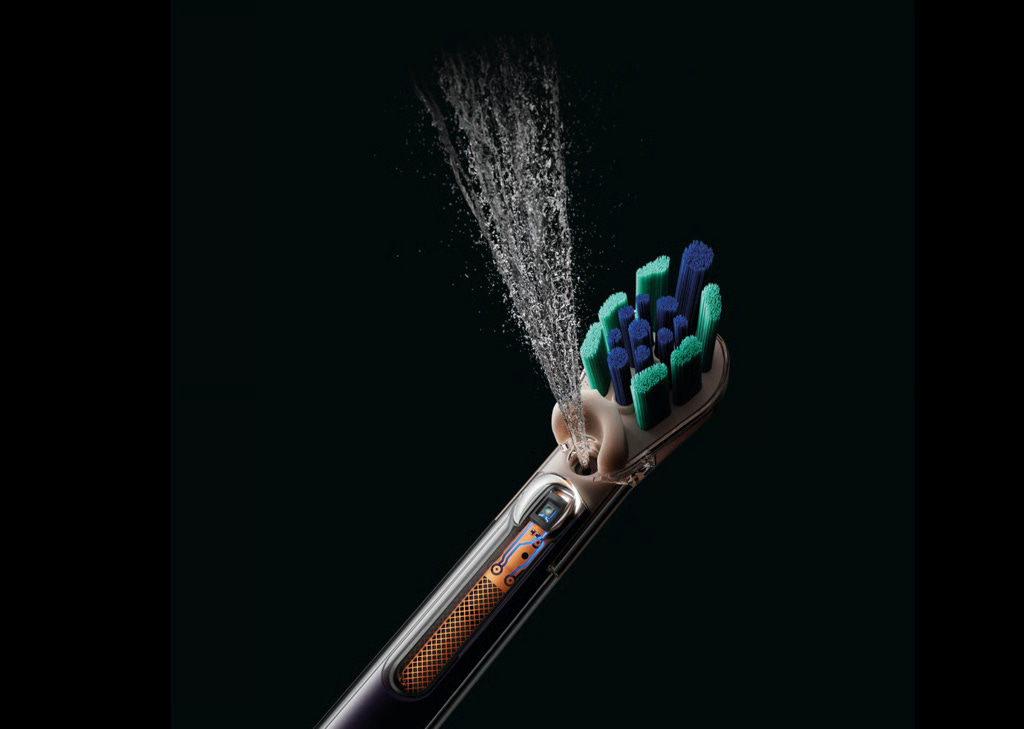
The technology analyzes images in real time and triggers a jet burst to remove the dental plaque. Dyson’s toothbrush uses sonic oscillation to move the dual-bristle brush head while brushing.
The toothbrush creates a completely new cleaning experience where flossing is no longer a time-consuming chore we often skip. Finally, the toothbrush is connected via Wi-Fi and Bluetooth to the MyDyson app, where users can access guided cleaning, coverage mapping, and customized jetting modes. And charging? It only needs a few seconds on the charging dock to recharge. Check out the presentation of the new Dyson CamerJet.
The Vine generation is getting their Divine
When Vine was shut down in 2017, Millennials had a hard time, and no one would believe that today, nearly a decade later, we have a Divine with the same format and spirit as Vine. The app features a scrolling feed with six-second videos. While the new app is inspired by the original platform, Divine is not formally affiliated with Vine.

Launched last week, the app already has 100,000 users posting 2010s-inspired videos and memes, and everyone is celebrating the return of the platform.
The biggest news about Divine is that it won’t allow you to post AI-generated content. Well, that’s the vibe Millennials have been missing lately. More about Divine here.
The UK is getting its own domestic AI
London-based Flower Labs, a full-stack AI startup, has announced the launch of its Endeavor 1.0 model, an alternative to leading US AI models. The frontier AI model comes as the UK government pushes for domestic alternatives to Silicon Valley AI companies and greater control over data and security. As co-founder Professor Nicholas Lane noted, “Europe should not have to rent its intelligence indefinitely from a handful of US companies.”
Available under license, Endeavor will allow clients to use frontier-level capabilities, train the model on their own data, and extend it with custom agents without transferring that data to a centralized server. Check out the official announcement.
Norway says NO to ‘pervert glasses’
The government of Norway is discussing a law to ban wearable glasses that are potential devices that could violate privacy. They are mainly targeting Meta and Snap wearables with access to the internet that may also have facial recognition and microphones. The news sparked a public backlash; however, if the devices are found to violate privacy rights, the wearables will be banned in public places. Maybe Norway’s case will become a precedent for other governments to take a closer look at gadgets potentially violating users’ privacy.
Featured image: Vinicius “amnx” Amano / Unsplash