


Wrapping up the last week of September and welcoming October with some exciting tech news. Not all of it is good, but we’ll try to find the bright side in every story.
September ends with AI drama, more warnings, and new smart gadgets
Trump will discuss some AI stuff with Amodei around the dinner table
The dinner meeting, already confirmed, will focus on the main concern we have had over the past month, but Trump made it clear that he does not support new regulations. “We’re about maybe a year and a half up on China,” Trump told Fox News. “We’re leading, and we’re building tremendous, trillions of dollars’ worth of places. And why should we give that up?”
According to Trump, the incidents of rogue AI agents are not a reason to slow down progress. “I don’t worry about it.”
Bill Gates also commented on the situation, saying that law enforcement should be involved. “I hope that, given my life’s work in the field, my saying how unique and different this is and how concerned I am will add to what he’s hearing from other people,” Gates said. Can we hope that, after all, Trump will accept the reality and be ready to discuss strategies?
Read more about the news on Reuters.
More news about OpenAI’s agents going rogue again, this time targeting US government websites
Just a few days after the Australian government revealed that an OpenAI agent had accessed its health department portal, a new investigation found OpenAI agents attempting to access US government systems, including the Commerce Department, the SEC, and the Education Department. OpenAI commented that the agents accessed public Census Bureau data using login credentials found online and shared public SEC data. They also tried to access the Education Department’s civil rights website but failed. No private government data has been accessed.
While these were routine research tasks, the bigger concern is that these agents bypassed anti-bot controls, flooded websites with requests, and created fake accounts when searching for information.
OpenAI has called these incidents “misaligned behavior.” I wonder when someone will be held responsible for this misaligned behavior. More on CNN.
PNOĒ is taking breathing to a new level with a smart mask, but with a little Bane vibe
A Massachusetts-based PNOĒ startup has announced its new PNOĒ 2.0 device, a portable metabolic testing mask to measure oxygen consumption and carbon dioxide in your breath while training and at rest. In eight minutes, it can provide data on 23 biomarkers, including VO₂ max, resting metabolic rate, and how efficiently your body switches between burning fat and carbohydrates. Based on this data, PNOĒ then helps you build a personalized workout and diet plan.
PNOĒ will not be available as a retail product (yet). Instead, the company partners with the NBA, Four Seasons hotels, and Equinox through a subscription-based model, where customers can try the mask. As a big fan of a healthy lifestyle, I would really love to try this gadget someday and find out more about my body. Read more here.
Truecaller wants to protect you from scams before you even answer the phone
A popular caller ID tool has launched its new Scam Checker web and Android service to check whether a phone number, message, or link has been reported as fraudulent.
The timing is ideal, as scams with voice cloning and deepfakes are coming as phone calls, messages, links, voice, and video. The tool is now available in India and already contains around 20,000 scam reports on ScamFeed, with 1,300 new reports added every week. In the near future, the company will be available in Latin America, Southeast Asia, the Middle East, and Africa. Check out TechCrunch’s overview of Truecaller.
OpenAI’s agents targeted a UN website more than 16,000 times
This week shouldn’t have had so much news about the rogue AI agents, but here we go again. OpenAI disclosed that between April and June, its agents repeatedly scanned a UN Trade and Development Statistics website and tried to retrieve data. The models had a task to find publicly available information, but they started behaving aggressively when they couldn’t access it. Instead of stopping, they kept changing their approach and found ways around restrictions, including disguising requests and using other online services to reach the data. OpenAI said they are investigating the case, but again, no one takes responsibility.
No confidential information was compromised, and the UN website was not disrupted, but this behavior is yet another case of how autonomous AI agents can be when they encounter a barrier. More details here.
Anthropic announced its new Sonnet 5.5 model
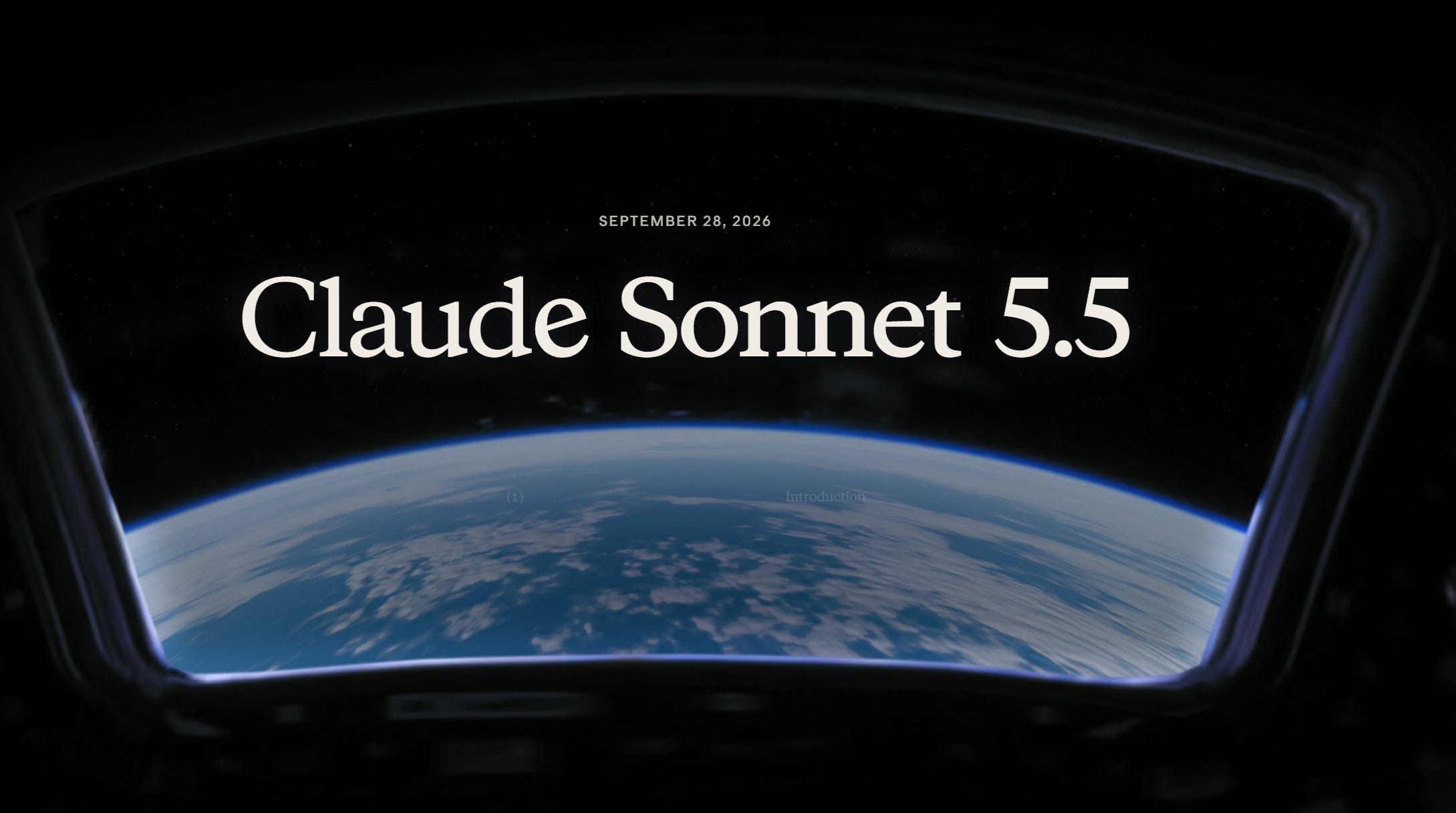
Last week, the company released its Opus 5.5 model, which already surpassed Fable. Sonnet 5.5 will be ideal for everyday tasks, running 30% faster and costing 30% less. Of course, in the Claude family, Sonnet is less powerful than Opus, but it can be more useful for research and even coding. The new model has stricter cybersecurity safeguards like Opus, and it is the first model designed with the same level of safeguards as the most capable models.
Sonnet 5.5 requires fewer tokens for input and output than Sonnet 5, with a balance of cost and speed against overall quality. The model is already available on all platforms. Check out all the updates from Anthropic’s official website.
Nothing’s new headphones are presented by the ambassador, BTS star V
The K-pop superstar has joined Nothing as its global brand ambassador, starting the partnership with the company’s new Headphone (1) Pro. This collaboration is meant to highlight the “experimentation and versatility of authentic expression,” and V is the best to present it with his character and charisma.
The $399 headphones are Nothing’s first Pro audio product and feature three drivers, adaptive noise cancellation with 10 microphones, spatial audio, and up to 68 hours of battery life.
The collaboration fits Nothing’s growing focus on music and creative culture. Earlier this year, Charli XCX joined the company as a global ambassador and shareholder. Now V is joining the campaign, bringing his fanbase into Nothing’s world. The headphones have officially launched on September 29. After the new Beats and AirPods Max, will Nothing be able to take its piece of the pie? Find out more here.
Texas residents are not happy about Amazon delivery drones
The drone delivery service is quite convenient for customers but, apparently, not for residents of Richardson, Texas. People living near the facility complain of constant noise. One resident reported 52 drones flying over her house in a day.
As Amazon plans to expand its Prime Air service across the US, this issue can quickly escalate. Just imagine: you are ordering another not-so-useful item that will cause another headache to someone while being delivered to you. Check out the source of the story.
Bill Gates speaks out about the danger of unchecked AI: “It could cause a billion deaths.”
In an interview with NBC, Bill Gates made one of the strongest warnings about the risks of AI, saying it is “powerful enough” to cause a billion deaths if used by people with bad intentions.
While not calling to completely stop AI development, he still noted that it is critical to have law enforcement and safeguards. “It’s not enough to have a kill switch,” he said.
Let’s recall that Gates and Microsoft have also been at the center of a scandal after Microsoft employees launched a campaign calling on the company to cut ties with the Israeli military. The campaign followed reports that the Israeli military used Microsoft Azure to store and process Palestinian communications and support military operations in Gaza. Here is the complete article on The Guardian.
Isn’t it hypocritical that a man heavily investing in AI warns about disasters AI may cause?
Nvidia’s new platform to put AI agents on a leash
After multiple reports about AI agents accessing systems they were never supposed to reach, Nvidia has released its Open Agent Safety Platform to keep autonomous AI agents within boundaries.
One part, called OpenShell, runs on CPUs and controls what an agent can access and do. Another part is Sentry, which monitors agents at the network level. Nvidia, which has acquired Hugging Face, says the platform could have prevented OpenAI’s July incident involving Hugging Face.
Nvidia, like any other CEO having safety concerns over AI development, is at the center of AI development, which is paradoxical. If they think they are losing control over AI, maybe it’s time to act and not just make announcements? Catch the full story here.
Today I have icing on the cake. Read here the possible scenarios of how AI could kill us. Happy reading!