


Last week was intense, with multiple reports raising concerns about AI technology developments, and all this news resonated in this week’s major events. Here is a short overview of key moments.
CEOs are warning about AI, governments are racing to control it, data centers are getting more expensive, and the plot keeps getting crazier every week.
Trump is not afraid of AI and won’t disrupt its development
After calls from AI scientists and growing warnings about the technology’s risks, China’s leader Xi Jinping proposed a global AI governance pact and called for more international cooperation and open-source AI.
On the other side of the planet, Trump has made it clear that the US is not slowing down because, in his words, whoever wins AI wins.
And China is no longer a distant competitor. Its AI companies are catching up with their American rivals while Beijing is pushing to build a stronger domestic AI ecosystem and reduce its dependence on US technology.
So while scientists are asking how to control AI, the US and China are asking a different question: who will control AI? More on CNN
Sam Altman on slowing down the AI industry not to lose control
Joining Dario Amodei and Elon Musk, Sam Altman also spoke about the safety concerns surrounding frontier AI. This is probably the first time competitors have united around the topic, and the issue is nothing but humanity’s safety. He described two possible development scenarios (both are not so positive). Amodei, in turn, offered a three-step plan to slow down the pace without sacrificing the US commercial advantage. His main point was to implement common safety standards and limit unchecked AI progress. Read the full overview by The Guardian.
P.S. Everyone is commenting on this news, but one comment captured attention. Timnit Gebru, co-founder of Black in AI, commented about companies and CEOs ‘stoking fears’ to shift attention from AI’s actual harms, like autonomous weapons. True or not, we are living in an era where technology is changing faster than we can predict its consequences.
AI stocks drop after industry leaders’ announcement
News doesn’t come and go in isolation. They have a huge impact. That’s what happened when the AI industry’s CEOs’ announcement about slowing down the industry caused stocks to drop worldwide. The confidence in the consistent development and growth of the industry was significantly shaken.
Chip stocks, which have been among the biggest winners of the AI boom, were also affected. The Philadelphia semiconductor index fell 5.2%, while Nvidia dropped 3%, AMD 4.5%, and Micron 5.4%. European and Asian chipmakers also fell. The concern is simple: if AI development slows, companies may also slow their huge spending on the chips and infrastructure needed to train and run these models. Read more about the news here.
A new amphibian gut bacterium destroys cancer cells
This week, Reddit had some exciting discussions about biotechnology, but one got special attention. The gut bacterium from tree frogs successfully treated cancerous tumors in rats, outperforming other existing technologies in cancer treatment.
Discovered by Japanese researchers who worked on nine bacterial strains from the intestines, Ewingella americana showed the highest cytotoxic activity and tumor-targeting characteristics. The bacteria have a double action: they kill cancer cells and activate the immune system, concentrating the body’s defenses where they are needed.
If or when this biotechnology is tested and approved for humans, it may become the first effective way to beat cancer. Read the full article here.
The new Volkswagen electric car promises to be the best in the market
Its Mission Efficiency concept, with futuristic design, is the most aerodynamic and can drive 1,278 km on a single charge. When tested, the mission efficiency used 7.51 kHw per 100 km with the climate control off. These numbers were recorded and certified by Germany’s Record Institute.
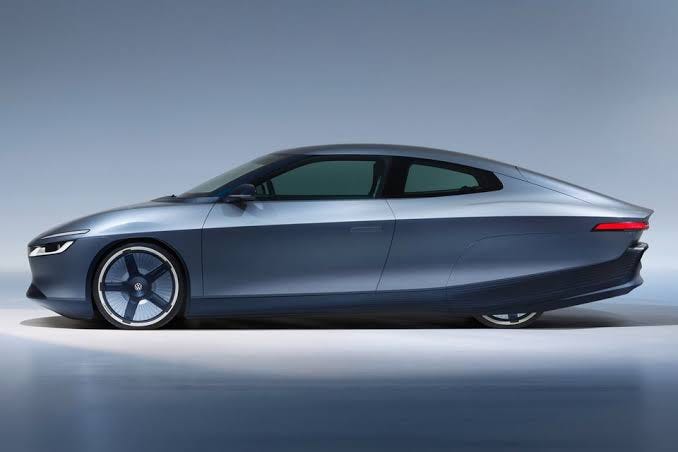
The hardware is quite ordinary: a 54.9 kWh battery, 99 kW from the motor, and the MEB+ platform. But the secret of its performance is in the design. Volkswagen built the Mission Efficiency around aerodynamics, giving it an extremely low 0,158 drag coefficient. The body is low and long, letting air flow around the car with minimal resistance. The wheels have also got new patented rim deflectors for better airflow.
But there is one big BUT. The car is too long to qualify for the EU’s proposed incentives for small EVs. So Volkswagen may have built one of its most efficient EVs yet, but Brussels basically says, “Nice try.” More on the news.
Another massive layoff at Oracle
The world’s largest database management company has shrunk its workforce by 13%; it has 22,000 employees in twelve months. To compare, Amazon cut 57,000 roles in 4 years, or 16% of the workforce. So far, Oracle wins in terms of layoff scale.
Employees received an email with a notice that “today was their last working day.” This round of layoffs followed Oracle’s announcement that it was setting aside $700 million for restructuring. Spending $55.7 billion on data centers and raising more debt to fund the rest, the layoffs will bring them $10 billion in annual payroll savings, which is meaningful but still cannot cover the debt. Read the article for more details.
Snap really wants us to believe that $2,200 glasses are the future
After releasing its Specs AR glasses, which turned out to be a failure, Snap is making another big push, arguing that the $2,195 price makes sense because these are not just smart glasses but a new kind of computer.
To make the case stronger, Snap is partnering with AWS, Nvidia, and Salesforce to bring Spec to the enterprise market. The scenarios where Spec will be used are still vague. The glasses can provide information hands-free, recognize what workers are looking at, and connect them to AI assistants. I wonder if anyone has asked workers whether they need those glasses or not? Snap is basically betting that if consumers don’t want $2,200 glasses, businesses might. Catch the full story.
Hackers stole a Flock camera and discovered just how much it can see
A group of hackers physically removed a Flock Safety surveillance camera in Georgia and extracted its software and stored data, having a rare look inside one of the US’s biggest automated surveillance systems (which, by the way, uses on-device encryption). Hackers copied around 1.6 million images of 50,000 vehicles in just 21 days. The investigation of this material showed that Flock cameras can detect not only license plates but also people, vehicles, bumper stickers, and bicycles.
These hackers were not the first to try to disrupt Flock cameras. In many towns, people are removing and damaging cameras, which has resulted in multiple arrests. Flock says its cameras are designed to help law enforcement solve crimes, but the findings raise fresh questions about how much movement data is being collected and who can access it.
Well, compared with Chinese Chongqing’s 2,6 million surveillance cameras, Flock looks almost innocent. Almost. See the full story here.
America’s AI obsession is about to get very expensive
The AI boom is creating such huge demand for electricity that, by 2035, US data centers could consume more natural gas than Germany and Japan combined. Data centers could consume around 18 billion cubic feet per day. Amazon, Meta, Microsoft, and Google have already announced their plans to build natural gas power plants.
Why natural gas? The reason is simple: AI data centers need power, and natural gas plants can be built and connected faster than many other energy sources.
What about the climate and economics? All that extra gas means more emissions, higher pressure on fuel supplies, and higher energy costs. So while the US keeps investing in AI, the machines running it may send the country back toward fossil fuels. See the full story on TechCrunch.
Samsung has finally rolled out One UI 9 for Galaxy S26
After starting beta versions in May and releasing 7 versions, the official public version is available for the S26 series.

With the new design, users have a My FanCam feature that automatically tracks and captures a person in a video, turning dynamic moments into a social-ready video. The latest Galaxy experience will bring more customizable quick panels, a new Tape feature in Notes, an interpreter with a new Thread View to follow translated conversations, and more. Find out more on Samsung Newsroom.
